



Ethiopian Black Seed Oil: Why Origin Makes a Difference
Content
Key takeaways
- Ethiopian highland seeds naturally contain significantly more thymoquinone than Egyptian seeds—often 2 to over 3%, compared to 0.5–1%.
- Altitudes above 2,000 m, intense sunlight, and mineral-rich volcanic soils are the reasons for the higher active ingredient content.
- The robust, spicy, slightly pungent taste is not a flaw, but a sign of high active ingredient content.
- When purchasing, four factors are decisive: documented thymoquinone content, cold pressing, unfiltered bottling, and freshness.
Mentioned in the article
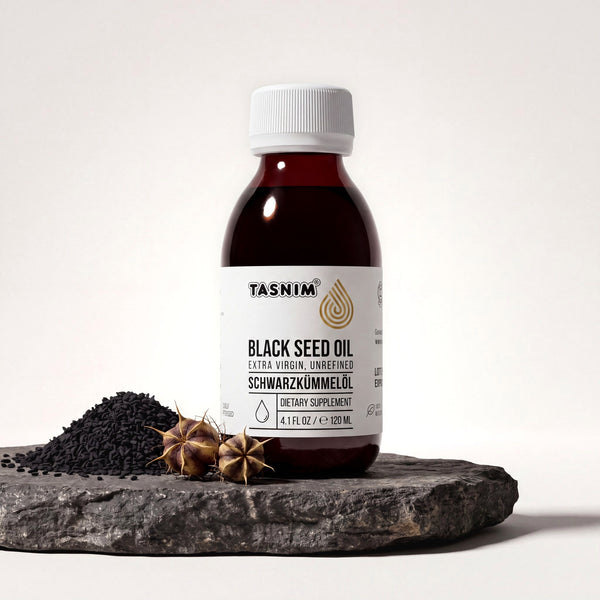
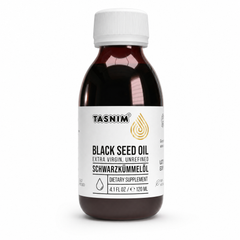
Ethiopian Black Seed Oil – Cold-Pressed & Unfiltered
Cold-pressed · 3.7% thymoquinone · Own mill since 2009
Tasnim Editorial Team · 2026 · 8 min read
Black cumin oil is not all the same. Most oils on the market come from Egyptian cultivation – but laboratory results tell a different story: seeds from the Ethiopian highlands naturally deliver a significantly higher content of thymoquinone, the most important bioactive ingredient in Nigella sativa. In this guide, you will learn what makes Ethiopian black cumin so special, how to recognize the differences, and what to look for when buying.
Where does black cumin actually come from?
True black cumin (Nigella sativa) has been cultivated as a spice and oil plant for over 2,000 years – from Egypt through Turkey and Syria to India. Black cumin oil was already found in Tutankhamun's tomb, and in Islamic tradition, black cumin has been highly valued as "Habbatussauda" for centuries.
The plant grows in many regions – but not equally well everywhere. As with wine or olive oil, climate, altitude, and soil determine the quality of the seeds. And that is exactly where Ethiopia comes into play.
Why the Ethiopian highlands offer ideal conditions
Ethiopian black cumin grows on plateaus at altitudes of over 2,000 meters. Three factors make the difference:
- Intense sunlight at high altitudes stimulates the plant to produce more protective secondary plant compounds – including thymoquinone.
- Large temperature differences between day and night allow the seeds to ripen more slowly and concentrate their contents.
- Mineral-rich, volcanic soils optimally supply the plant with nutrients.
The result: seeds with an active ingredient profile that significantly outperforms Egyptian, Turkish, or Indian varieties – recognizable by their stronger, spicier, sharper taste and measurably higher thymoquinone content.
Ethiopian vs. Egyptian: a direct comparison
| Ethiopian black cumin oil | Egyptian black cumin oil | |
|---|---|---|
| Thymoquinone content | frequently 2% to over 3% | usually approx. 0.5–1% |
| Taste | strong, spicy, slightly sharp | mild, smooth |
| Cultivation | Highlands, over 2,000 m | Lowlands, Nile Delta |
| Suitable for | anyone looking for maximum active ingredient density | Beginners, users sensitive to taste |
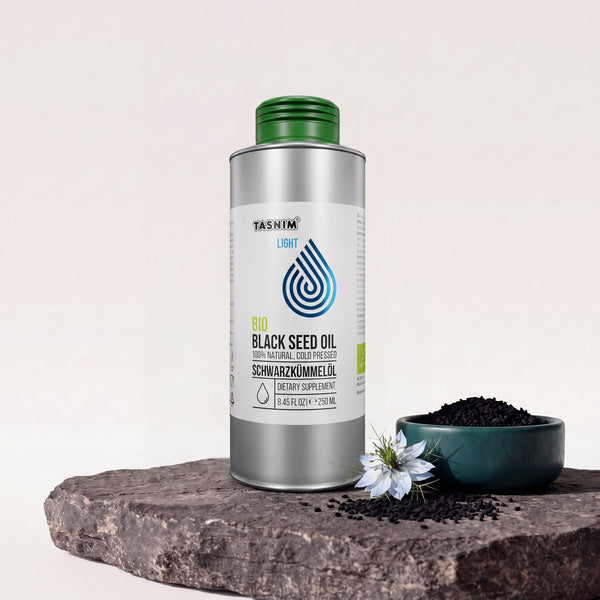
Both oils have their place. Those looking for a mild start should choose Egyptian oil – such as our Organic Black Cumin Oil Light from Egypt. Those who want the full intensity of black cumin cannot do without Ethiopian oil.
What to look for when buying Ethiopian black cumin oil
"Ethiopian" on the label alone is not proof of quality. Four points are crucial:
- Documented thymoquinone content: Reputable suppliers have every batch analyzed in a laboratory and publish the results.
- Cold-pressed: Only gentle pressing at low temperatures preserves the sensitive ingredients.
- Unfiltered: Unfiltered oil contains suspended particles and thus the full active ingredient density of the seed.
- Freshness: The shorter the time from pressing to bottling, the better – thymoquinone is sensitive to light, heat, and oxygen.
How Tasnim processes Ethiopian black cumin
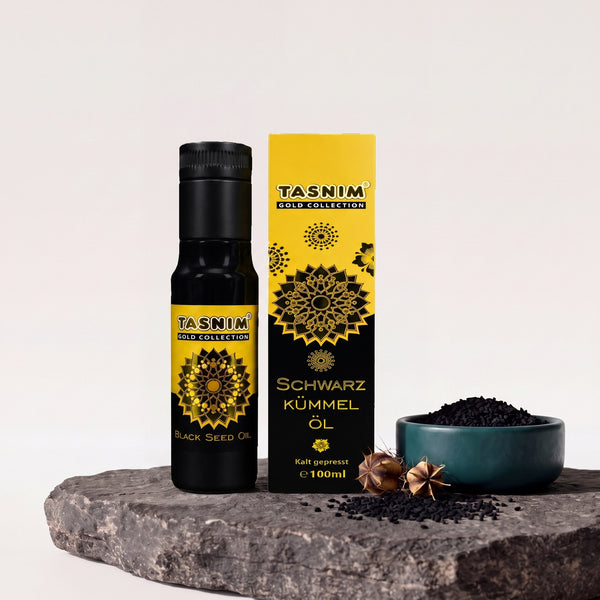
We have been working according to these exact criteria since 2009. Our Premium Black Cumin Oil is cold-pressed and bottled unfiltered seasonally in our own mill using Ethiopian seeds. The current batch achieves a laboratory-confirmed thymoquinone content of 3.7% – the highest documented value on the DACH market. Every batch is tested individually, and all laboratory reports are publicly available.
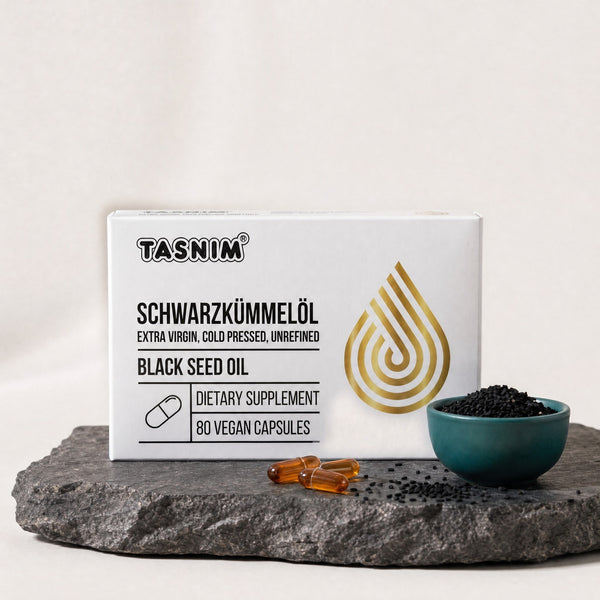
For on-the-go use or for anyone who finds the strong taste too intense, Ethiopian oil is also available as capsules – same quality, taste-neutral.
Conclusion: Origin is not a detail, but the deciding factor
Those who use black cumin oil for its valuable ingredients should pay attention to its origin. Ethiopian seeds naturally deliver the highest thymoquinone concentration – provided the oil is gently pressed, bottled unfiltered, and laboratory-tested. Mild Egyptian oils are the ideal start, while Ethiopian oils are the choice for anyone who wants it more intense.
Premium-Quality Ethiopian Black Cumin Oil
Cold-pressed in our own mill · unfiltered · 3.7% thymoquinone laboratory-confirmed
FAQ: Frequently Asked Questions About Ethiopian Black Cumin Oil
Is Ethiopian black cumin oil better than Egyptian?
"Better" depends on the goal. Ethiopian seeds naturally contain significantly more thymoquinone and have a stronger taste. Egyptian oil is milder and often more pleasant for beginners.
Why does Ethiopian black cumin oil taste so intense?
The sharp, spicy taste comes primarily from the high content of essential oils and thymoquinone. The intensity is therefore not a flaw, but a sign of active ingredient density.
How can I recognize genuine Ethiopian black cumin oil?
By the documented thymoquinone content. Request laboratory analyses of the specific batch – values from around 2% indicate genuine Ethiopian highland quality.
Is the high thymoquinone content suitable for everyone?
Most people tolerate even more intense oils well if they start with small amounts. Those who react sensitively should start with the mild Egyptian oil or with capsules. Pregnant women and people taking medication should consult a doctor beforehand.
Studies & Further Sources
- Black Cumin (Nigella sativa L.): A Comprehensive Review on Phytochemistry, Health Benefits, Molecular Pharmacology, and Safety – PMC/NCBI
- Review on Clinical Trials of Black Seed (Nigella sativa) and Its Active Constituent, Thymoquinone – PMC/NCBI
- Nigella sativa (black seed) safety: an overview – PMC/NCBI
Note: This post is for general information purposes and does not replace medical advice. Dietary supplements are not a substitute for a balanced diet.
Premium-quality black seed oil
Cold-pressed in our own mill · unfiltered · 3.7% thymoquinone lab-certified
Discover now