



How to take black seed oil properly: dosage, timing and application
Content
Key takeaways
- Proven for adults: 1 teaspoon in the morning and 1 teaspoon in the evening – pure, with honey, or stirred into water or juice.
- Consistency beats quantity: a smaller teaspoon every day is more effective than a large amount once in a while.
- The best time is the one you can realistically stick to every day – on an empty stomach in the morning or in the evening before bedtime.
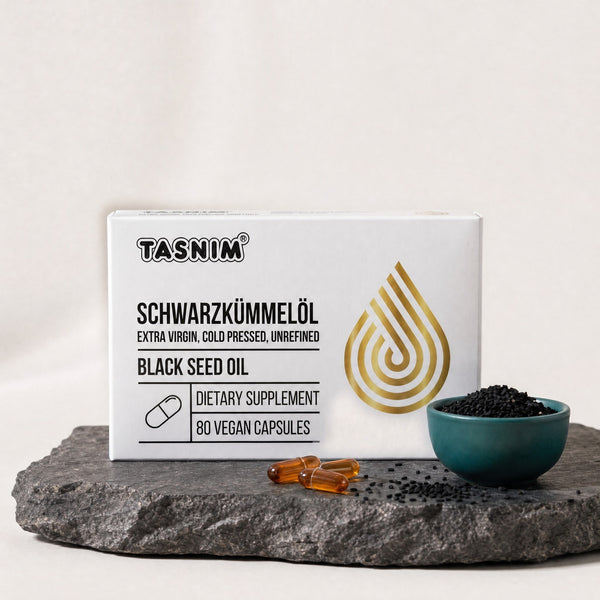
- Capsules are the unflavored alternative for on the go; do not use for frying, as heat destroys the active ingredients.
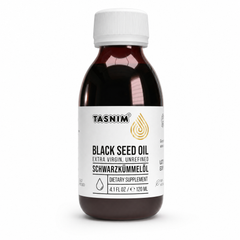
Mentioned in the article
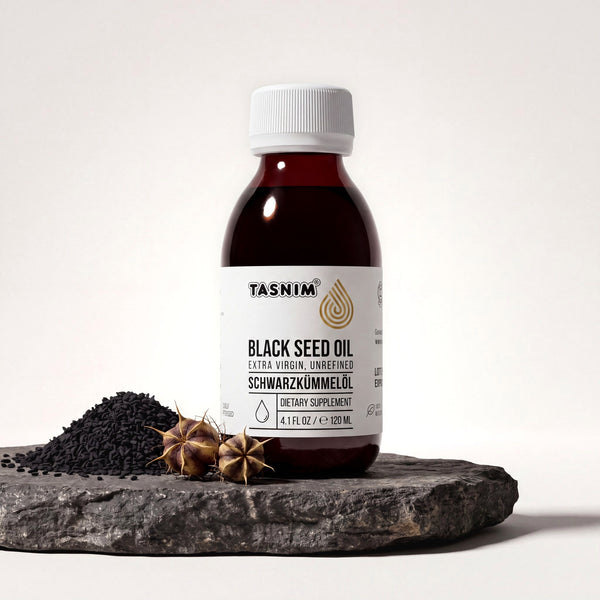
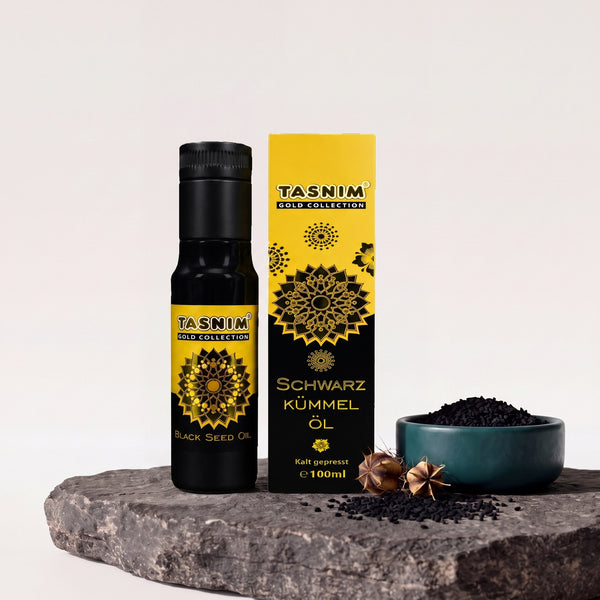
Ethiopian Black Seed Oil – Cold-Pressed & Unfiltered
Cold-pressed · 3.7% thymoquinone · Own mill since 2009
Tasnim Editorial · 2026 · 7 min read
Black seed oil is not drunk like juice, but carefully dosed – usually by the teaspoon. The most common questions are: How much per day? Morning or evening? Pure or mixed? And for how long? Here you will find the answers for a routine that you can actually stick to in everyday life.
The short answer
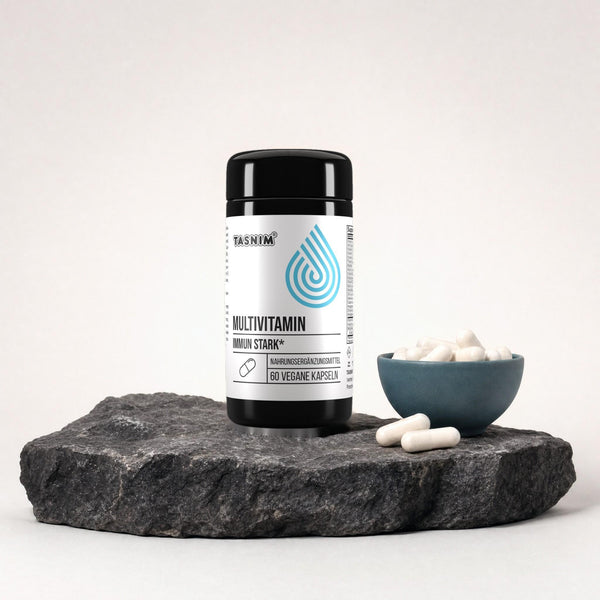
For adults, this has proven effective: 1 teaspoon in the morning and 1 teaspoon in the evening – pure, with a little honey, or stirred into water or juice. Those who do not like the intense taste can opt for black seed oil capsules: same quality, flavor-neutral, and ideal for on the go.
How much black seed oil per day?
| Situation | Usual intake |
|---|---|
| Getting started (1st week) | 1 teaspoon daily, preferably in the morning |
| Daily routine | 1 tsp in the morning + 1 tsp in the evening |
| More intensive phases | up to 3 teaspoons daily |
| Capsules instead of oil | according to the recommended intake, divided between morning and evening |
Consistency is more important than the maximum amount. A smaller teaspoon every day brings more than a large amount now and then. Note: A highly concentrated Ethiopian oil with over 3% thymoquinone is significantly more intense than standard commercial products – therefore, less is sufficient.
Morning or evening?
Both work – the key is that the intake fits into your established routines:
- In the morning on an empty stomach: the classic. Many combine the teaspoon of oil with a glass of water before breakfast.
- In the evening before bed: the second fixed intake, easy to combine with the evening routine.
The best time is the one you can realistically stick to every day.
Pure, mixed, or as a capsule?
| Form of intake | Suitable for | Advantage |
|---|---|---|
| Pure from the spoon | everyone who wants to dose consciously | direct, flexible, full intensity |
| With honey or in juice | everyone for whom pure is too strong | milder taste, same amount |
| Capsules | Professionals, travelers, those sensitive to taste | flavor-neutral, precisely dosed, practical on the go |
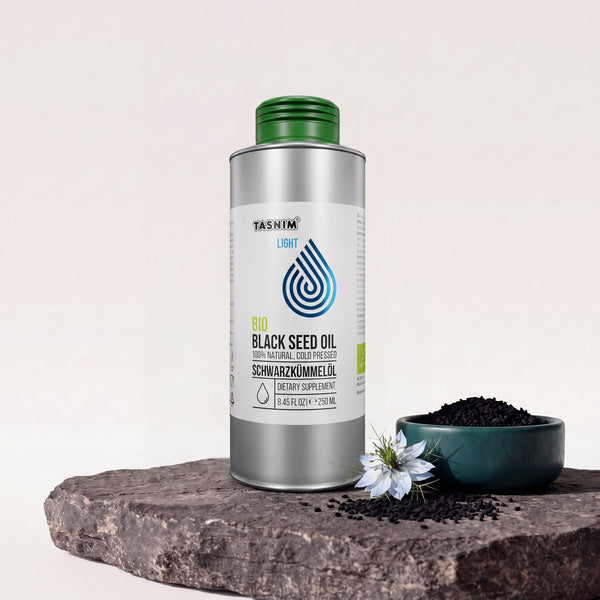
Tip: The strong, spicy aroma of a genuine Ethiopian oil is not a defect, but a sign of a high concentration of active ingredients. Those who are new to it can start with the mild Organic Black Seed Oil Light from Egypt and later switch to the Ethiopian Premium Oil.
How long can you take black seed oil?
Black seed oil is traditionally used as a daily routine over longer periods. Many use it in courses of 2–3 months, others permanently as a fixed part of their diet. Listen to your body: Start low, increase slowly, and take breaks if necessary.
The 4 most common mistakes when taking it
- Starting too high: Those who start directly with 3 teaspoons are often put off by the taste. Better to start small.
- Taking it irregularly: Without a fixed routine, the intake falls by the wayside after two weeks. Link it to existing habits (brushing teeth, breakfast).
- Only looking at the amount: 2 teaspoons of an active-ingredient-poor oil bring less than 1 teaspoon of a laboratory-tested oil with a high thymoquinone content.
- Storing it incorrectly: Exposed to air, warmth, and light, every oil loses quality. Store in a dark, cool place, and close tightly.
Conclusion: Consistency beats quantity
The ideal intake is simple: 1 teaspoon in the morning, 1 teaspoon in the evening – or capsules, if it needs to be practical. The key is a rhythm you can stick to, and an oil whose quality is worth the daily intake.
Find your routine
Premium oil for conscious intake, capsules for on the go – both laboratory-tested.
FAQ: Common questions about intake
Should you take black seed oil on an empty stomach?
Many prefer taking it in the morning before breakfast. Those with a sensitive stomach should take the oil with a meal.
Can I mix black seed oil in food?
Yes – ideal in cold dishes such as yogurt, quark, smoothies, or salad dressing. Do not use for frying: heat destroys the sensitive ingredients.
What should I do if the oil is too strong for me?
Mix it with honey or juice, start with the mild Egyptian oil – or switch to capsules.
Can children or pregnant women take black seed oil?
For children, smaller amounts apply; pregnant women should refrain from taking concentrated oils or consult a doctor beforehand. The same applies to regular medication intake.
Studies & further sources
- Nigella sativa (black seed) safety: an overview – PMC/NCBI
- Review on Clinical Trials of Black Seed (Nigella sativa) and Its Active Constituent, Thymoquinone – PMC/NCBI
Note: This post is for general information and does not replace medical advice. Dietary supplements are not a substitute for a balanced diet.
Premium-quality black seed oil
Cold-pressed in our own mill · unfiltered · 3.7% thymoquinone lab-certified
Discover now